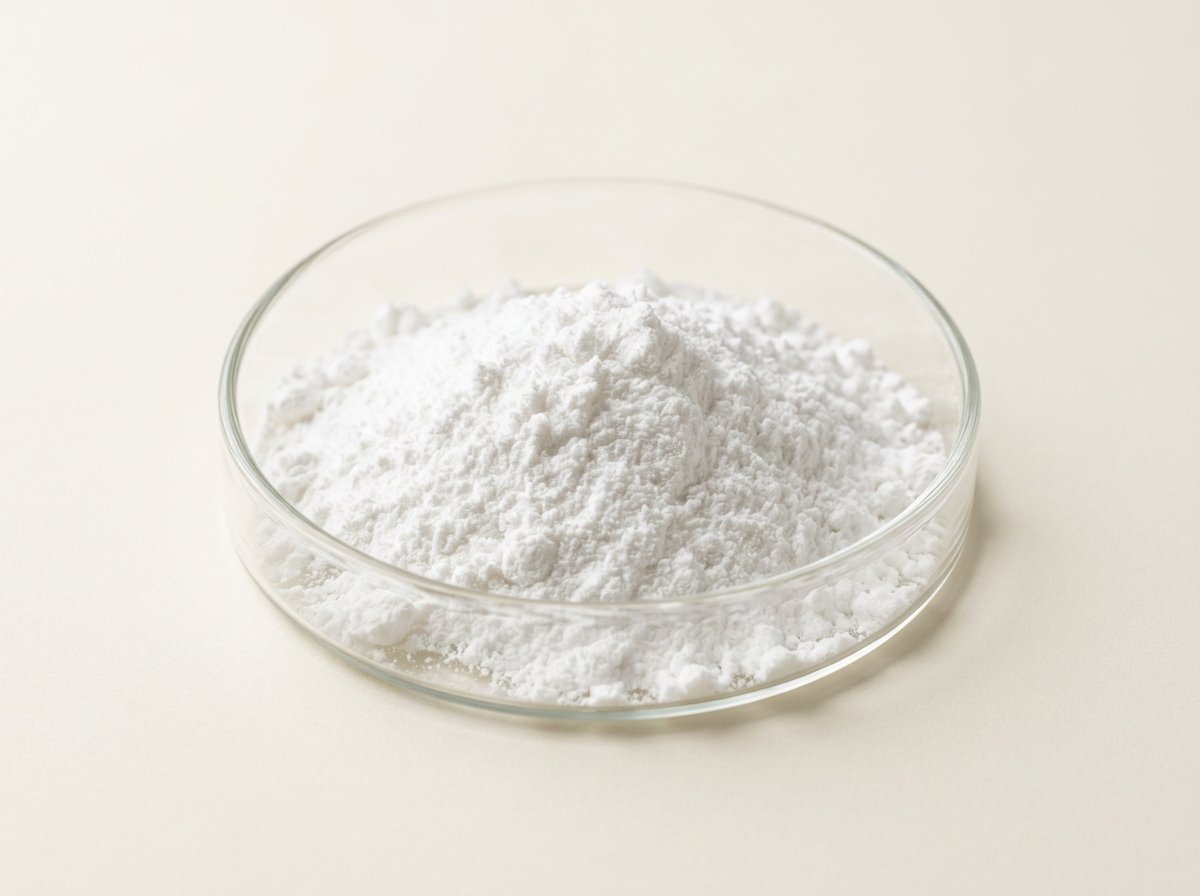
Walk down the cosmetics aisle in London, Dubai or Mumbai and you will see "talc-free" printed on more face powders, setting powders and baby powders every year. The shift was driven by consumer worry, legal cases and regulatory attention around talc. For formulators, it has created a practical question: what goes in its place?
Light magnesium carbonate is one of the most useful answers. This article explains why, where it works best, and where it needs help from other ingredients.
Why brands are moving away from talc
Talc has been used in cosmetics for over a century because it is soft, slippery and cheap. The concern is contamination: talc deposits can occur near asbestos, and testing for trace asbestos is difficult. In 2024 the International Agency for Research on Cancer (IARC) classified talc as "probably carcinogenic to humans" (Group 2A). In the United States, the Modernization of Cosmetics Regulation Act (MoCRA) of 2022 directed the FDA to set standardised testing methods for asbestos in talc-containing cosmetics.
None of this bans talc. But many brands, especially in clean beauty and baby care, have decided it is simpler to remove it than to explain it. Retailers in the UK, EU and Gulf markets increasingly ask suppliers for talc-free options.
What light magnesium carbonate brings to a powder
Light magnesium carbonate (INCI: Magnesium Carbonate, or Magnesium Carbonate Hydroxide for the basic form) is a precipitated, very low-density white powder. In a cosmetic formula it does several jobs:
- Oil and sweat absorption. Its porous particles soak up sebum, which keeps skin matte for longer. This is the main reason it is used in setting powders and dry shampoos.
- Bulk and fluffiness. Its very low bulk density gives a light, airy powder that is easy to pick up with a brush.
- Carrier for fragrance. In loose powders and bath products, it holds perfume oils and releases them slowly.
- Soft matte finish. It reduces shine without the heavy, chalky look of some mineral fillers.
- Mild pH buffering. It is slightly alkaline, which is useful in deodorant powders.
Where it works best
| Product | Typical role of magnesium carbonate |
|---|---|
| Loose and pressed setting powders | Oil control, matte finish, bulk |
| Dry shampoo | Absorbs scalp oil, adds volume to hair |
| Talc-free body and baby powders | Moisture absorption, blended with starches |
| Powder deodorants | Absorbs sweat, buffers odour-causing acids |
| Bath bombs and fizzing salts | Fragrance carrier, texture |
Where it needs help
Magnesium carbonate is not a one-for-one swap for talc. Talc's plate-like particles give "slip", the silky glide across skin. Magnesium carbonate on its own feels drier. Most talc-free formulas therefore combine it with:
- Starches (corn, rice or tapioca) for softness and absorption.
- Mica or synthetic fluorphlogopite for slip and light reflection.
- Silica or boron nitride for a silky, blurring feel.
- Kaolin for extra oil control.
Pressed powders also need enough binder, since the very light particles of magnesium carbonate do not compress as easily as talc.
What to check when you source cosmetic-grade magnesium carbonate
- Heavy metals: lead, arsenic, mercury and cadmium should be tested on every batch, to the limits of your target market.
- Microbiology: total aerobic count, yeast and mould, and absence of specified pathogens.
- Whiteness and fineness: these affect colour matching and skin feel. Ask for a residue-on-sieve value.
- Origin of the mineral: precipitated (synthetic) magnesium carbonate is made from dissolved salts, not mined, so asbestos contamination is not a concern. Ask the supplier to confirm the process in writing.
- Documents: COA, SDS and, for some markets, a statement of non-animal testing and allergen status.
Frequently asked questions
Is magnesium carbonate safe in cosmetics?
Yes. Magnesium carbonate is listed in the EU CosIng database as an absorbent, bulking and opacifying agent and is widely used in face powders and deodorants. As with any ingredient, buy a cosmetic grade tested for heavy metals and microbes.
Can magnesium carbonate fully replace talc?
Usually not on its own. It replaces talc's absorbency well but gives less slip, so it is normally blended with starch, mica or silica.
Does precipitated magnesium carbonate contain asbestos?
Precipitated magnesium carbonate is made chemically from dissolved magnesium salts rather than mined from rock, so there is no geological route for asbestos contamination.
Cosmetic-grade supply from Medovaq
We manufacture cosmetic-grade light magnesium carbonate in Gujarat and supply personal care brands in India and contract manufacturers in the UK, Europe, the USA and the UAE. Request a sample to test it in your talc-free formula.